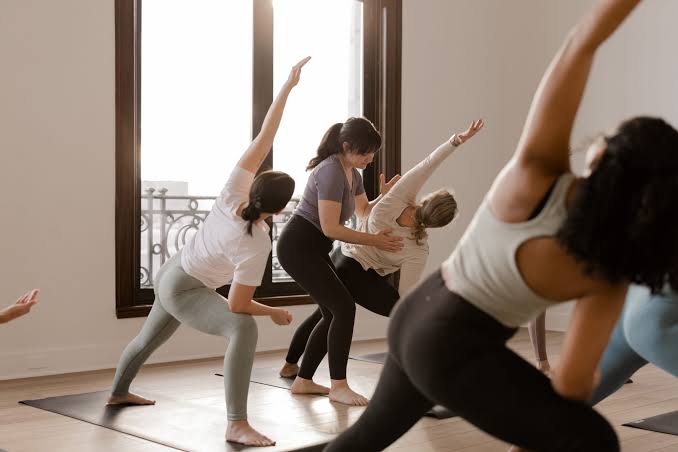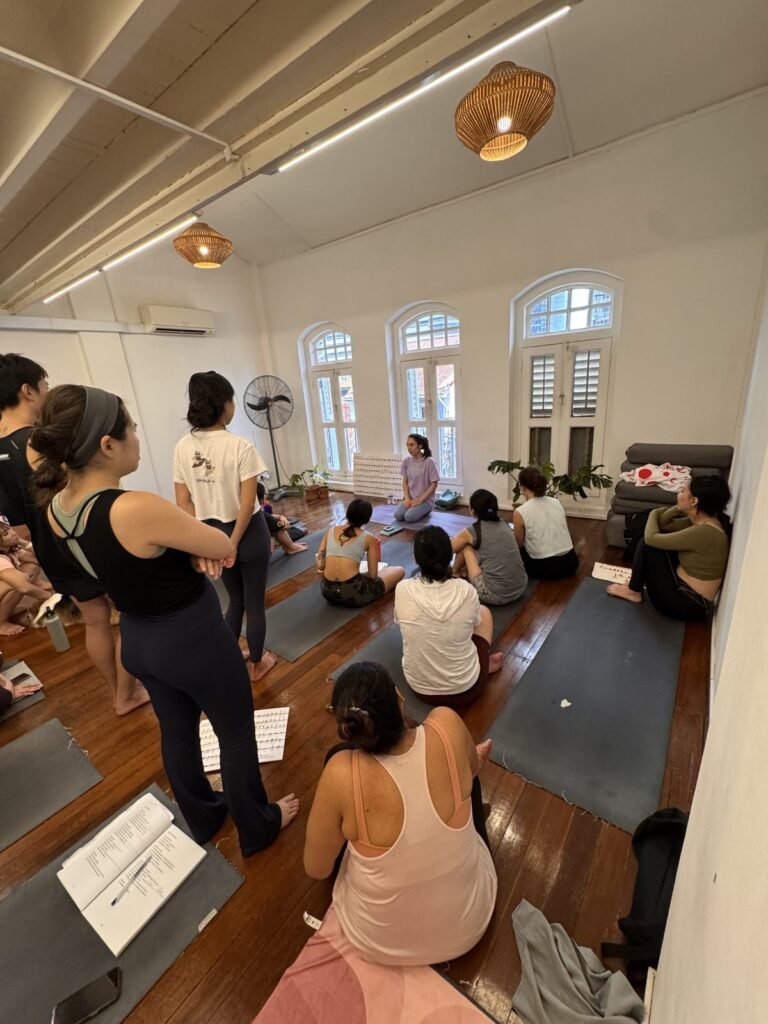
Peculiar Yogi offers a 200-hour Hatha Vinyasa Yoga Teacher Training (YTT) programme at its studio at 36B Arab Street, Singapore, within walking distance of Bugis MRT. Designed for practitioners looking to deepen their understanding of yoga or take their first steps towards teaching professionally, the programme combines physical practice with anatomy, traditional yoga philosophy, teaching methodology and professional development.
The studio offers a ten-week weekend training track, making it an option for those who want to pursue teacher training while continuing with their weekday commitments. Classes are conducted in person, with the school emphasising smaller cohorts and supervised teaching rather than relying entirely on lectures or independent study.
Peculiar Yogi describes itself as a Yoga Alliance Registered Yoga School (RYS 200) and states that it has trained more than 24 batches of students. As with any teacher training, prospective students should confirm the current registration status, training requirements and assessment arrangements before enrolling.
What stands out about Peculiar Yogi’s teacher training?
One of the more interesting aspects of Peculiar Yogi’s programme is its combination of traditional yoga education and practical teaching preparation. While many students initially consider a 200-hour YTT because they want to improve their own practice, the transition from following instructions to confidently leading a room of students requires a different set of skills.
Peculiar Yogi’s published curriculum addresses this through supervised teaching, verbal and physical adjustment techniques, posture modifications and the use of props. Students are introduced to recognising when a posture needs to be simplified or progressed, which is particularly relevant when teaching mixed-ability classes.
The programme also includes a professional development component covering teaching profiles, personal branding, marketing and the practical considerations of building a sustainable yoga career. This is a useful addition for trainees who intend to teach after graduation, although prospective students should establish how much time is allocated to these topics and what practical support is provided.
The studio also advertises priority consideration for its graduates who wish to teach at Peculiar Yogi. This may be appealing to aspiring instructors who would otherwise need to approach studios independently after graduation. However, priority consideration should not be mistaken for a guaranteed teaching position.
A closer look at the curriculum
Anatomy, physiology and movement
The anatomy component covers the human body’s muscular, nervous, cardiovascular and respiratory systems, alongside biomechanics and different planes of movement.
For aspiring yoga teachers, anatomy becomes particularly valuable when applied to real students rather than studied purely as theory. Understanding how joints move, how muscular limitations affect particular postures and why two students may experience the same pose differently can influence how safely and effectively an instructor teaches.
Peculiar Yogi includes alignment and movement analysis within its wider curriculum. Before enrolling, it is worth asking how these lessons are connected to practical teaching situations, particularly when working with beginners, students with limited mobility or people returning to exercise after an injury.
Yoga philosophy and traditional texts
The philosophy syllabus introduces students to foundational yoga concepts and classical texts, including the Vedas, Upanishads, Bhagavad Gita and Yoga Sutras.
Students also encounter the Eight Limbs of Yoga, the four paths of yoga, and concepts such as the kleshas, koshas and gunas. Meditation, mantras, chakras and kriyas are included in the published curriculum.
This provides an opportunity to explore yoga beyond its modern association with stretching and physical fitness. However, covering a topic in a 200-hour curriculum does not necessarily mean examining it in considerable academic or historical depth. Students who are especially interested in classical philosophy may want to ask about the recommended readings, faculty expertise and the amount of discussion devoted to these subjects.
Asana practice, alignment and modifications
Asana training covers standing, seated, prone and supine postures, together with inversions. Students learn posture names in Sanskrit and English and examine how different movements can be incorporated into a yoga practice.
An important distinction when comparing teacher training courses is whether students are primarily expected to perform postures correctly themselves or also learn how to teach those postures to people with different physical abilities.
Peculiar Yogi’s syllabus includes alignment, the application of props, and regression and progression techniques. These are relevant skills for teachers who may eventually encounter students with varying levels of strength, flexibility and experience.
Prospective trainees should nevertheless ask how the programme approaches individual anatomical differences and whether alternatives are taught for students who cannot comfortably perform certain postures.
Teaching methodology and supervised practice
The teaching component is arguably one of the most important parts of a foundational YTT, particularly for students who hope to begin teaching soon after graduating.
Peculiar Yogi includes supervised teaching within its studio, together with verbal instructions and physical adjustment techniques. This gives trainees an opportunity to move beyond personal practice and develop their ability to communicate instructions to others.
What the publicly available curriculum does not fully establish is the amount of individual teaching time each student receives, how feedback is delivered and whether trainees are required to pass a formal practical assessment.
These details are worth confirming. A trainee who receives repeated opportunities to teach, make mistakes and improve may have a substantially different learning experience from someone whose teaching practice consists of only a small number of brief demonstrations.
Students should also enquire about the school’s approach to consent for hands-on adjustments, inclusive teaching and adapting classes for students who have different needs.
Is the ten-week weekend format suitable for working adults?
For Singapore-based practitioners with full-time jobs, a weekend training programme may be more practical than taking several weeks of leave for an intensive course overseas.
Peculiar Yogi’s published weekend track extends over ten weeks. This allows students to revisit concepts between training sessions, reflect on feedback and maintain some separation between their studies and everyday responsibilities.
There are trade-offs, however. A 200-hour course is a substantial commitment, regardless of how the hours are distributed. Consecutive weekends of physical practice, theory lessons and teaching preparation can be demanding, particularly for students who work long hours during the week.
Before committing, request a detailed timetable showing the start and end times for each training day, scheduled breaks, any weekday obligations and the expected amount of independent study. It is also important to understand whether missed sessions can be made up and whether doing so involves additional fees.
A ten-week schedule may sound manageable at first, but the actual experience depends on the intensity of each weekend and the amount of work expected between sessions.
Yoga Alliance registration and certification
Peculiar Yogi identifies itself as a Yoga Alliance Registered Yoga School offering a 200-hour Hatha Vinyasa training programme.
For prospective teachers, it is important to distinguish between completing a teacher training programme and becoming a Registered Yoga Teacher (RYT 200).
Graduates who successfully complete an eligible 200-hour programme at a registered school can apply for the RYT 200 credential through Yoga Alliance. Registration is a separate process and is not automatically conferred simply because a student completes the course.
Students should verify the school’s current RYS status through Yoga Alliance, confirm that their chosen intake falls under the registered programme and clarify the requirements for obtaining their completion certificate.
It is also worth remembering that Yoga Alliance registration establishes a recognised training framework, but does not independently guarantee that every graduate will be ready to teach professionally. Teaching confidence, practical ability and further experience remain important considerations.
Who might benefit most from this programme?
Peculiar Yogi may be particularly suitable for students who already maintain a regular yoga practice and want a more structured understanding of the movements, philosophy and teaching principles behind it.
Its Hatha Vinyasa focus may appeal to practitioners interested in teaching traditional posture-based classes alongside more fluid sequences. The inclusion of anatomy, modifications and supervised teaching makes the syllabus relevant to those considering their first instructor qualification.
The weekend arrangement is another consideration for people who would prefer to study locally instead of attending a residential training programme abroad. The Arab Street location is reasonably accessible by public transport, although students should still account for the travel and time commitment involved in attending regularly.
The programme may be less suitable for those who want to complete their training in a very short period, prefer online study or are primarily seeking specialist qualifications in areas such as prenatal yoga, yoga therapy or advanced restorative practices.
It is equally worth considering that not every YTT participant intends to become an instructor. Students who simply want to explore yoga philosophy, understand their bodies better or bring greater intention to their existing practice may also find value in a foundational programme, provided they are comfortable with its teaching-oriented components.
What should you clarify before enrolling?
The school’s programme page outlines its curriculum and promotes different 2026 intakes, including early-bird enrolment incentives. Because batch schedules and promotional arrangements can change, prospective students should request an updated information pack covering the precise intake they intend to join.
In particular, we recommend clarifying the following:
- Total course fees: Confirm the full amount payable, any early-bird discounts, deposit requirements, instalment arrangements and potential additional expenses.
- Training hours: Request a breakdown of scheduled instructional hours, supervised teaching and any independent learning requirements.
- Teacher qualifications: Ask who will be teaching the course, their backgrounds, and whether the advertised faculty will be present throughout the intake.
- Class size: Establish the maximum number of trainees rather than relying solely on the description of a small cohort.
- Teaching assessments: Find out how practical teaching is evaluated, whether individual feedback is provided and what happens if a trainee does not meet the required standard.
- Attendance requirements: Check the minimum attendance threshold, make-up arrangements and implications of missing a training weekend.
- Learning materials: Ask whether manuals, books, supplementary resources and access to studio classes are included.
- Cancellation and deferral policies: Understand the refund conditions and whether students can transfer to a later intake if circumstances change.
These questions are particularly important for first-time trainees who may not yet know how much a teacher training programme can vary in practical content, assessment expectations and post-graduation opportunities.
Our editorial verdict
Peculiar Yogi offers a reasonably broad foundational curriculum, with a combination of anatomy, philosophy, asana analysis, supervised teaching and professional development. Its ten-week weekend track makes it an option worth comparing for working adults in Singapore who want to complete their training locally.
The inclusion of career-related topics and priority consideration for graduate teaching opportunities is a notable feature, especially for students who are serious about pursuing instruction rather than treating a YTT solely as personal enrichment.
What we would want to examine more closely is the practical teaching experience provided to each trainee. A comprehensive syllabus is useful, but the quality of a teacher training programme also depends on how effectively students are assessed, corrected and supported as they develop the confidence to teach independently.
We would also like greater clarity on the distribution of instructional hours, intake-specific pricing, maximum cohort sizes and arrangements for students who cannot complete the programme on schedule.
Our take: Peculiar Yogi deserves consideration for its structured Hatha Vinyasa curriculum, local weekend format and stated emphasis on supervised learning. It would be sensible to compare its actual teaching hours, assessment approach and total fees against other Singapore-based 200-hour programmes before making a decision.
Our directory check and disclosure
Information reviewed: 3 November 2026
This listing was prepared using Peculiar Yogi’s published teacher training information and Yoga Alliance’s official guidance on teacher registration requirements.
Course descriptions, curriculum topics, training format and graduate opportunities are based on the provider’s publicly available information. We have not independently attended or assessed the training programme, interviewed graduates or verified the current availability of individual intakes. The school’s Yoga Alliance registration status should be checked directly through the official registry.
Fees, promotional offers, instructors, schedules and enrolment policies may change without notice. Readers should contact Peculiar Yogi directly before making payment.
Official programme: https://peculiaryogi.com/ytt
Yoga Alliance: https://yogaalliance.org/