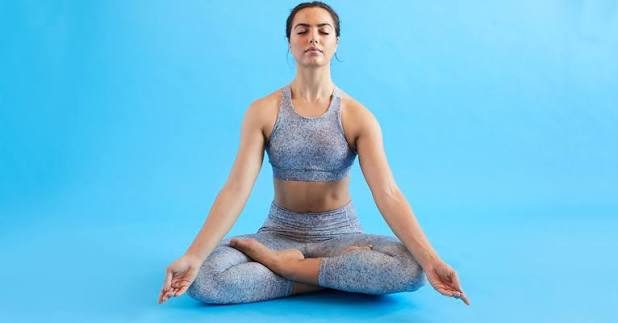
Lotus Pose, or Padmasana, is a traditional seated yoga posture in which both feet rest on the opposite thighs, with the knees opening outwards and the spine held upright. It is closely associated with meditation, pranayama and classical yoga practice, although the posture itself requires considerable mobility through the hips and is not suitable for everyone.
Of all the seated yoga postures, Lotus Pose is probably one of the most recognisable. It appears in images of meditation, traditional yoga illustrations and countless photographs of practitioners sitting peacefully with their hands resting on their knees. There is something almost effortless about the way it is presented, as though crossing the legs into this position is a natural starting point for anyone hoping to meditate.
In practice, Padmasana is considerably more demanding than it looks.
After years of practising yoga across home, online and studio settings, I have become increasingly wary of the assumption that familiar-looking postures are necessarily accessible. Lotus Pose is a particularly good example. While the upper body remains relatively still, the legs are placed into a position that requires substantial hip mobility, and attempting to achieve the familiar shape without that mobility can create uncomfortable pressure around the knees.
It is also a posture that carries a certain amount of prestige within yoga communities. Some practitioners regard full Lotus as an important milestone, particularly when they begin exploring meditation or traditional Hatha Yoga. Yet being able to sit in Padmasana does not necessarily make someone a more accomplished meditator, and there is no reason why an otherwise comfortable seated practice should be abandoned in pursuit of it.
Understanding Lotus Pose therefore involves more than learning where to place the feet. It requires knowing what the posture asks of the body, recognising when it is appropriate and understanding why simpler alternatives can be equally valuable.
Lotus Pose at a Glance
| Field | Details |
|---|---|
| English name | Lotus Pose |
| Sanskrit name | Padmasana (पद्मासन) |
| Also known as | Full Lotus, Lotus Position |
| Pose category | Seated posture, meditation posture, hip-opening pose |
| Difficulty level | Intermediate to advanced |
| Primary focus areas | Hip external rotation, hip mobility, seated postural stability, spinal alignment, breath awareness and meditation |
| Secondary areas involved | Knees, ankles, thighs, trunk stabilising muscles |
| Common props | Folded yoga blanket, meditation cushion, bolster, yoga blocks for supporting the thighs where appropriate |
| Typical uses | Meditation, pranayama, traditional seated yoga practice |
| Preparatory poses | Easy Pose, Bound Angle Pose, Head-to-Knee Pose, Half Lotus Pose |
| Common alternatives | Easy Pose, Half Lotus, Supported Cross-Legged Seat, Staff Pose, Chair-Seated Meditation |
| Key caution | Avoid forcing the knees or pulling the feet into position when sufficient hip mobility is unavailable |
What Is Lotus Pose?
Lotus Pose is a cross-legged seated posture traditionally used for meditation and breathing practices. In the full expression of Padmasana, each foot rests on the opposite thigh, with the soles facing upwards and the knees extending outwards.
The name comes from the Sanskrit words padma, meaning lotus, and asana, meaning seat or posture.
The lotus flower has considerable symbolic significance in Indian religious and philosophical traditions, including Hinduism and Buddhism. It is frequently associated with purity, spiritual development and the possibility of remaining undisturbed despite difficult surroundings.
Lotus Pose reflects this symbolism through its association with a stable meditation seat. The arrangement of the legs can create a relatively compact sitting position for practitioners whose hips comfortably accommodate the required rotation.
However, Padmasana should not be confused with the entirety of meditation practice. Traditional yoga includes multiple seated postures, and meditation does not depend on achieving one particular arrangement of the legs.
In contemporary yoga classes, Lotus Pose is sometimes introduced as an advanced hip-opening posture rather than used primarily for meditation. Both interpretations exist, although the latter can encourage practitioners to treat the position as a flexibility goal rather than a functional sitting position.
How to Do Lotus Pose (Padmasana)
Full Lotus should be approached gradually, particularly if you are unfamiliar with the posture. It requires substantial movement at the hip joints, and attempting to force the legs into position can place unnecessary stress on the knees.
If you have not previously practised Half Lotus comfortably, it is preferable to begin with a simpler seated variation under the guidance of an experienced teacher.
Step-by-step instructions
- Begin in Staff Pose (Dandasana). Sit on the floor with both legs extended in front of you. If your lower back rounds significantly or sitting upright feels uncomfortable, place a folded blanket beneath your sitting bones.
- Bend your right knee and allow the thigh to rotate outwards from the hip. Keep the movement controlled and avoid pushing the knee down. Notice whether the movement feels comfortable through the hip joint.
- Support the right lower leg with your hands. If your hip has sufficient mobility, carefully guide the right foot towards the upper part of the left thigh, near the hip crease. Avoid pulling on the foot or using the hands to force the knee into a deeper bend. Keep the ankle comfortably aligned rather than allowing it to twist sideways.
- Pause and assess your comfort. The first leg should settle without sharp sensations around the knee or ankle. If the position requires considerable force, return to a simpler seated posture instead.
- Bend your left knee and rotate the thigh outwards from the hip. Only if the first position remains completely comfortable and your mobility permits it, gently bring the left foot onto the upper part of the right thigh. There should be no need to push the knee down or pull the foot aggressively into place.
- Sit upright through the spine. Allow your pelvis to settle evenly, lengthen comfortably through your torso and relax your shoulders away from your ears. Avoid exaggerating the arch of your lower back to create the appearance of a straighter posture.
- Rest your hands comfortably. You may place your palms on your thighs or knees, facing upwards or downwards, depending on the purpose of your practice.
- Breathe naturally. If the position feels completely comfortable, remain for a few relaxed breaths before carefully releasing the legs. Uncross them slowly, supporting their weight with your hands where necessary.
If practising the posture on both sides, alternate which leg is positioned first rather than always crossing the legs in the same order.
There is no requirement to increase the holding time simply because you can enter the posture. For many practitioners, a shorter, comfortable seated practice is more useful than remaining in Lotus until the knees or ankles begin to protest.
Understanding the Anatomy of Lotus Pose
One of the most important things to understand about Padmasana is that the position depends heavily on movement at the hips.
The hip is a ball-and-socket joint capable of moving in several directions, including flexion, abduction and rotation. Lotus Pose requires a substantial combination of these movements, particularly external rotation, in which the thigh rotates outwards.
The knee behaves differently. Although it permits some rotation when flexed, it is primarily designed for bending and straightening, rather than accommodating the large rotational movements available at the hip.
When a practitioner attempts Lotus Pose without sufficient hip rotation, the movement may be transferred into the knee instead.
This is where the posture becomes potentially problematic.
Someone may be able to pull a foot onto the opposite thigh while appearing to achieve the expected shape, but the resulting position can place excessive rotational stress around the knee. The fact that the foot reaches its destination does not necessarily mean the movement has been achieved appropriately.
This is also why pushing the knees towards the floor is not a reliable method of improving Lotus Pose.
If the movement is restricted by the hips, pressing down on the knees does not resolve the underlying limitation. It may simply transfer additional force into structures that are less suited to that movement.
Individual anatomy also influences what is possible. Differences in hip joint structure, tissue flexibility, previous injuries and body proportions mean that some practitioners will find Padmasana considerably more accessible than others.
Although mobility can improve through appropriate training, full Lotus is not necessarily a realistic or advisable goal for every body.
What Are the Benefits of Lotus Pose?
Lotus Pose is traditionally valued as a meditation seat, although its potential benefits should be considered separately from the wider benefits associated with yoga and meditation.
1. Provides a traditional seated position for meditation
For practitioners who can enter Padmasana without discomfort, the compact arrangement of the legs may provide a stable base for sitting upright.
This can be useful during meditation or pranayama, particularly when someone is accustomed to the posture and does not need to make frequent adjustments.
However, Lotus Pose is not necessary for meditation. A supported cross-legged seat or upright chair can serve the same purpose for many practitioners.
2. Encourages awareness of seated posture
Maintaining an upright seated position involves awareness of the pelvis, spine and surrounding musculature.
In Lotus Pose, practitioners may become more conscious of how the torso is balanced over the hips and whether they are relying on unnecessary tension to remain upright.
The goal is not to create a rigidly straight spine, but to find a comfortable position in which the torso can remain supported without excessive effort.
3. Requires substantial hip mobility
Padmasana places the hips in a deeply externally rotated position, making it a challenging posture for practitioners who enjoy exploring hip mobility.
However, the position should not be regarded as a universal test of hip flexibility. Anatomical differences influence the range of motion available to each person, and forcing a deeper position is not necessarily beneficial.
4. Can support breath awareness
Because Lotus Pose is traditionally practised in stillness, it may provide an opportunity to observe natural breathing patterns without the distraction of continuous movement.
This benefit is related to the practice of mindful breathing rather than a special physiological effect of the leg position itself.
If the posture creates discomfort, a simpler seated position may make it considerably easier to maintain relaxed breathing.
5. Encourages patience and a less achievement-oriented practice
For some practitioners, the challenge of Lotus Pose provides an opportunity to examine their relationship with physical goals.
The desire to achieve the full posture can become a useful reminder that greater flexibility is not always synonymous with better yoga.
Learning when a movement is appropriate, when to use an alternative and when to stop pursuing a particular shape can be just as valuable as developing the mobility required to perform it.
Preparatory Yoga Poses for Lotus Pose
Students interested in Padmasana often begin by exploring gentler seated postures that introduce hip movement without requiring the same degree of rotation.
These should not be treated as a guaranteed progression towards full Lotus. They can help practitioners understand their mobility, but no sequence of preparatory postures can promise that every person will eventually achieve Padmasana.
Easy Pose (Sukhasana)
Easy Pose is a comfortable cross-legged sitting position in which the feet rest beneath or in front of the opposite legs rather than on top of the thighs.
Despite its name, Sukhasana is not necessarily effortless, particularly for people with limited hip mobility. Sitting on a folded blanket can make the position more accessible.
It is also a perfectly legitimate long-term meditation posture rather than merely a preliminary stage before Lotus Pose.
Bound Angle Pose (Baddha Konasana)
Bound Angle Pose involves sitting with the soles of the feet together while allowing the knees to open outwards.
The posture introduces hip movement that may be relevant to Padmasana, although the two positions are not mechanically identical.
Avoid pressing the knees towards the floor. If the thighs remain elevated, blocks or blankets may provide additional support.
Head-to-Knee Pose (Janu Sirsasana)
Janu Sirsasana combines a seated forward fold with one knee bent and the thigh opening outwards.
It can help practitioners explore differences in hip mobility from one side to the other, provided the knee remains comfortable.
The intention should not be to force the bent leg flat against the floor. Supporting the knee and reducing the forward fold may make the posture more appropriate.
Half Lotus Pose (Ardha Padmasana)
Half Lotus is closer to the full posture because one foot rests on the opposite thigh while the other leg remains in a simpler cross-legged arrangement.
Although often described as a modification, Half Lotus still requires considerable hip rotation and can place stress on the knee if forced.
It should therefore be treated as an intermediate posture in its own right rather than an automatically safe beginner variation.
If Half Lotus feels uncomfortable, there is no reason to progress towards full Padmasana.
Common Mistakes in Lotus Pose
Forcing the feet onto the opposite thighs
One of the most concerning habits in Lotus Pose is using the hands to pull the feet into position when the hips do not naturally accommodate the movement.
The resulting force can be transferred into the knees, particularly when the lower legs are rotated or pulled aggressively.
The foot should never need to be forced into place. If the movement is unavailable, return to a simpler seated posture.
Pressing the knees down
There is a common assumption that the knees should rest on the floor in every seated yoga posture.
In Lotus Pose, their position is influenced by hip mobility and individual anatomy. Pressing down on the knees does not necessarily improve hip rotation and may create unnecessary joint stress.
Avoid using your hands, props or another person’s body weight to force the knees lower.
Twisting the ankles
When placing the feet on the opposite thighs, some practitioners allow the ankles to bend sharply sideways.
This can create discomfort around the ankles and may be a sign that the posture is being forced.
The feet and ankles should remain comfortably supported without being aggressively twisted into position.
Rounding or over-arching the back
Lotus Pose is usually associated with an upright seated posture, but maintaining that position can be difficult when the hips or pelvis do not settle comfortably.
Some practitioners compensate by rounding through the lower back, while others exaggerate the spinal arch in an attempt to sit taller.
Supporting the pelvis on a folded blanket may make an upright position more comfortable. If the legs remain uncomfortable, however, changing the sitting posture is usually more helpful than trying to correct the spine.
Staying in the pose despite discomfort
Because Lotus Pose is often associated with meditation, practitioners may feel that they should remain still for an extended period.
Unfortunately, remaining in an uncomfortable position does not necessarily develop patience or concentration. It may simply increase pressure around the knees, ankles or hips.
Sharp pain, numbness, tingling or increasing discomfort are reasons to release the posture.
Treating full Lotus as a requirement for advanced yoga
Perhaps the most persistent mistake is assuming that mastering Padmasana represents an essential stage in yoga development.
It is possible to have an extensive, meaningful yoga practice without ever performing full Lotus. Physical mobility is only one aspect of yoga, and the ability to sit in a particular arrangement does not determine the quality of someone’s meditation or philosophical understanding.
Lotus Pose Modifications and Alternatives
Half Lotus Pose
If one hip can comfortably accommodate the position, Half Lotus may offer an alternative to the full posture.
However, it should not be used if it creates pressure around the knee or ankle. Half Lotus is still a demanding seated position and is not automatically suitable for beginners.
Supported Easy Pose
Sit cross-legged on a folded blanket or meditation cushion, allowing the knees to rest in a comfortable position.
Additional folded blankets may be placed beneath the thighs where support is helpful, without forcing the legs into a lower position.
For many practitioners, this is a more sustainable meditation seat than Padmasana.
Seated Meditation on a Bolster
A firm bolster or meditation cushion can elevate the pelvis and make it easier to sit upright.
The legs can remain comfortably crossed, or another position can be chosen depending on individual mobility.
This variation can be particularly useful for people who find floor sitting uncomfortable after several minutes.
Chair-Seated Meditation
Sit towards the front or middle of a stable chair, with both feet supported and the spine comfortably upright.
There is no requirement to cross the legs or adopt a traditional floor-based posture.
A chair may be the most appropriate option for practitioners with knee discomfort, reduced hip mobility or difficulty sitting on the floor.
Is Lotus Pose Safe for Your Knees?
The knees are among the main areas of concern when practising Padmasana.
Although the posture is often described as a hip opener, its appearance can encourage practitioners to manipulate the lower legs rather than work within the available movement at the hips.
When insufficient hip rotation is available, pulling the foot towards the opposite thigh may place considerable stress on the knee.
This is particularly concerning for practitioners with previous knee injuries, joint instability or pain during deep knee flexion.
If you experience discomfort in the knee while attempting Half Lotus or full Lotus, do not assume that the sensation is a normal part of stretching.
A qualified instructor can help assess the movement and suggest alternatives within their professional scope, while persistent or injury-related symptoms should be discussed with an appropriate healthcare professional.
According to the US National Center for Complementary and Integrative Health, beginners should avoid advanced yoga practices such as the Lotus Position until they have developed suitable experience and received appropriate guidance.
It is also important to recognise that practising hip-opening exercises does not guarantee that full Lotus will eventually become safe or accessible. Anatomical differences can influence how much rotation is available at the hip joint.
For some practitioners, choosing another meditation posture is the more sensible long-term decision.
Who Should Avoid or Modify Lotus Pose?
Full Lotus may be unsuitable for people with knee, hip or ankle injuries, particularly when the posture involves painful joint compression or rotational stress.
Practitioners recovering from lower-limb surgery should seek appropriate professional guidance before attempting such a demanding seated position.
The posture may also be uncomfortable for those who experience numbness, tingling or pain during prolonged floor sitting.
Pregnant practitioners may find that changes in comfort, balance and body proportions make different sitting positions more appropriate. Individual advice is preferable to assuming that Lotus Pose is either universally safe or universally unsuitable during pregnancy.
Beginners should generally develop familiarity with simpler seated postures before considering full Lotus.
There is no need to attempt Padmasana simply because it appears in a traditional yoga sequence or is demonstrated by an instructor.
How Long Should You Hold Lotus Pose?
There is no universally appropriate holding time for Padmasana.
In traditional meditation contexts, experienced practitioners may remain seated for extended periods. However, this should not be interpreted as a goal that everyone needs to work towards.
For someone who is physically comfortable with the posture, beginning with a few relaxed breaths may be sufficient.
If the position remains comfortable and the practitioner has appropriate experience, the duration may be increased gradually.
However, if the knees, hips or ankles begin to feel strained, there is no reason to continue holding the posture.
A stable meditation seat should make it easier to concentrate on breathing or meditation rather than requiring constant attention to physical discomfort.
Lotus Pose vs Easy Pose: Which Is Better for Meditation?
Lotus Pose has a strong traditional association with meditation, but that does not necessarily make it the best option for every practitioner.
Easy Pose allows the legs to rest in a less demanding arrangement and can be modified with cushions or folded blankets.
For people with limited hip rotation, this may provide a considerably more comfortable way to sit upright for an extended period.
Lotus Pose may offer a stable base for those who can enter it naturally, but there is no convincing reason to assume that the position itself produces superior meditation outcomes.
If the purpose of sitting is to develop concentration and awareness, the most appropriate posture is generally one that can be maintained without unnecessary pain or distraction.
This is particularly worth remembering when yoga is presented through photographs of exceptionally flexible practitioners. A visually impressive meditation seat is not necessarily a functional one.
Is Lotus Pose Necessary for Advanced Yoga Practice?
No. Although Padmasana has an established place in traditional Hatha Yoga and meditation practices, being able to perform it is not a universal requirement for advanced yoga.
A practitioner may develop considerable knowledge of yoga philosophy, anatomy, pranayama and teaching methodology without ever sitting in full Lotus.
Likewise, someone who can easily perform Padmasana may still be relatively inexperienced in other aspects of yoga.
The ability to achieve the posture is influenced partly by physical characteristics that are not necessarily related to broader yoga proficiency.
This is one reason I would be cautious about using Lotus Pose as a marker of progress in yoga teacher training.
A thoughtful instructor should be able to explain how the posture works, recognise when it is unsuitable and offer appropriate alternatives rather than insisting that every student eventually achieve it.
Our Editorial Verdict
Lotus Pose occupies an interesting position within yoga because it is both a traditional meditation posture and a modern symbol of physical accomplishment.
Its cultural and historical significance is worth understanding, particularly for practitioners interested in classical yoga, meditation and pranayama. However, the widespread use of Padmasana in yoga imagery can make the posture appear considerably more accessible than it actually is.
We would be especially cautious about treating full Lotus as an inevitable progression from Easy Pose or Half Lotus. Although some practitioners may gradually develop the mobility required, others may find that their anatomy does not comfortably accommodate the position.
In either case, the quality of the practice should not be judged by how closely it resembles a photograph.
For students who can practise Padmasana comfortably, it may provide a useful meditation seat. For everyone else, there are several alternatives that can support an upright, attentive sitting position without requiring the same degree of hip rotation.
Our take: Lotus Pose is a traditional and demanding seated posture that deserves careful instruction, particularly because of the potential stress placed on the knees when it is forced. It is worth exploring if your body comfortably accommodates the movement, but there is no need to make full Lotus a personal goal simply because it is considered an iconic yoga pose. A comfortable, sustainable meditation posture is far more valuable than an impressive-looking one that causes pain.
Frequently Asked Questions
Is Lotus Pose suitable for beginners?
Full Lotus is generally considered an intermediate-to-advanced posture because it requires substantial hip rotation. Beginners are usually better served by Easy Pose or another supported seated position.
Why is Lotus Pose so difficult?
Padmasana requires a combination of hip flexion, abduction and external rotation. Individual differences in joint structure and mobility can make the position difficult or unsuitable, even for experienced practitioners.
Does Lotus Pose improve hip flexibility?
The posture places the hips in a deeply externally rotated position, but it should not be forced as a method of increasing flexibility. Gentler mobility exercises may be more appropriate, and improvements are not guaranteed to make full Lotus accessible.
Should your knees touch the floor in Lotus Pose?
Not necessarily. Knee position is influenced by individual anatomy and hip mobility. Never press the knees down or use force to achieve a particular appearance.
Can Lotus Pose damage your knees?
Forcing the legs into Lotus Pose, especially when sufficient hip rotation is unavailable, can place excessive stress on the knees and potentially cause injury.
Is Half Lotus safer than full Lotus?
Half Lotus generally requires less total hip rotation, but it can still cause knee discomfort or injury if forced. It is not automatically suitable for everyone.
Can I meditate without sitting in Lotus Pose?
Yes. Meditation can be practised in Easy Pose, on a meditation cushion, seated in a chair or in another comfortable position that supports attention and relaxed breathing.
How long does it take to learn Lotus Pose?
There is no reliable timeline. Some practitioners have sufficient mobility relatively early, while others may never find full Lotus comfortable. Years of practice do not guarantee that the posture will become accessible.
Editorial Research and Sources
Research and methodology: This guide was prepared using established yoga teaching references on Padmasana, its anatomical requirements, modifications and safety considerations. Particular attention was given to the distinction between hip mobility and potentially harmful rotational forces at the knee.
Primary and authoritative sources:
https://www.yogajournal.com/poses/lotus-pose
https://yogainternational.com/article/view/5-tips-for-building-your-lotus-pose
https://www.nccih.nih.gov/health/yoga-effectiveness-and-safety
Editorial note: This page provides general yoga education and is not a substitute for individual instruction or medical advice. Physical suitability depends on anatomy, existing conditions and the practitioner’s experience.
Last reviewed: 3 November 2026
Key details
| Sanskrit Name | Padmasana |
|---|---|
| Pose Family | Seated |
| Level | Advanced |
| Focus Areas | Hip external rotation |
| Teaching Focus | Never force feet into position |
| Entry Steps | Review the starting position and teach a gradual entry suited to the student |
| Exit Steps | Return gradually and pause if uncomfortable |
| Modifications | Use easy pose or half lotus |
| Safety Notes | Substantial knee injury risk if forced |
| Props | Block; strap; blanket; wall or chair as appropriate |
| Breathing | Keep the breath steady; do not force breath retention |
| Common Mistakes | Chasing a visual shape instead of respecting individual range |
| Duration Guidance | No fixed universal hold; adjust to experience and comfort |