Yoga is often presented as a practice of endless possibility. Spend enough time on social media, and you will inevitably encounter someone demonstrating a seemingly impossible backbend, an effortless handstand or a split that looks as though it defies human anatomy. There is usually an encouraging caption about patience, consistency or trusting the process, accompanied by the implication that anyone can eventually achieve the same thing if they are sufficiently dedicated.
I understand the appeal of these messages. One of the pleasures of practising yoga is discovering that your body can do things you previously thought were beyond you. A posture that once felt awkward gradually becomes more familiar, your balance improves, and movements that required considerable concentration begin to feel almost instinctive.
But after close to a decade of practising yoga in different settings, from following online classes at home to attending sessions in various studios, I have become increasingly interested in what happens when that progression slows down, or when a particular posture never becomes accessible in the way we imagined.
We tend to discuss yoga in terms of improvement. Greater flexibility, stronger muscles, better balance and increasingly sophisticated postures are all familiar ways of measuring progress. There is considerably less conversation about the possibility that some physical limitations may remain, regardless of how consistently we practise.
That is not necessarily a failure of discipline or commitment. Sometimes, the more valuable lesson is recognising that our bodies have different capabilities, that these capabilities change over time, and that yoga does not need to be an endless project of physical improvement to remain worthwhile.
The Problem With Believing Every Yoga Pose Is Achievable
One of the more persistent ideas in contemporary yoga culture is that difficult postures are simply easier postures that we have not practised long enough.
If you cannot touch your toes, you need to stretch more. If your hips resist Lotus Pose, you need to work on opening them. If your heels do not reach the floor in Downward-Facing Dog, perhaps another few months of practice will finally get you there.
There is some truth in the underlying message. Consistent, appropriately designed movement can improve flexibility, strength, balance and coordination. It would be misleading to suggest that physical abilities are entirely predetermined or that practising regularly cannot make a meaningful difference.
The problem arises when we assume that every body is capable of achieving every posture, provided enough time and effort are invested.
Our anatomy is not identical. Differences in skeletal proportions, joint structure, previous injuries and natural mobility all influence how we move. Even among experienced practitioners, there can be considerable variation in what feels comfortable or physically possible.
Take Lotus Pose, for example. It is often presented as an advanced sitting position that can be achieved through progressive hip-opening exercises. Yet the posture requires substantial movement at the hips, and not everyone has the joint structure or available mobility to perform it comfortably. Trying to compensate for restricted hip movement by forcing the knees into position can place unnecessary stress on those joints.
It is entirely possible for someone to have practised yoga diligently for years and still find Lotus Pose unsuitable.
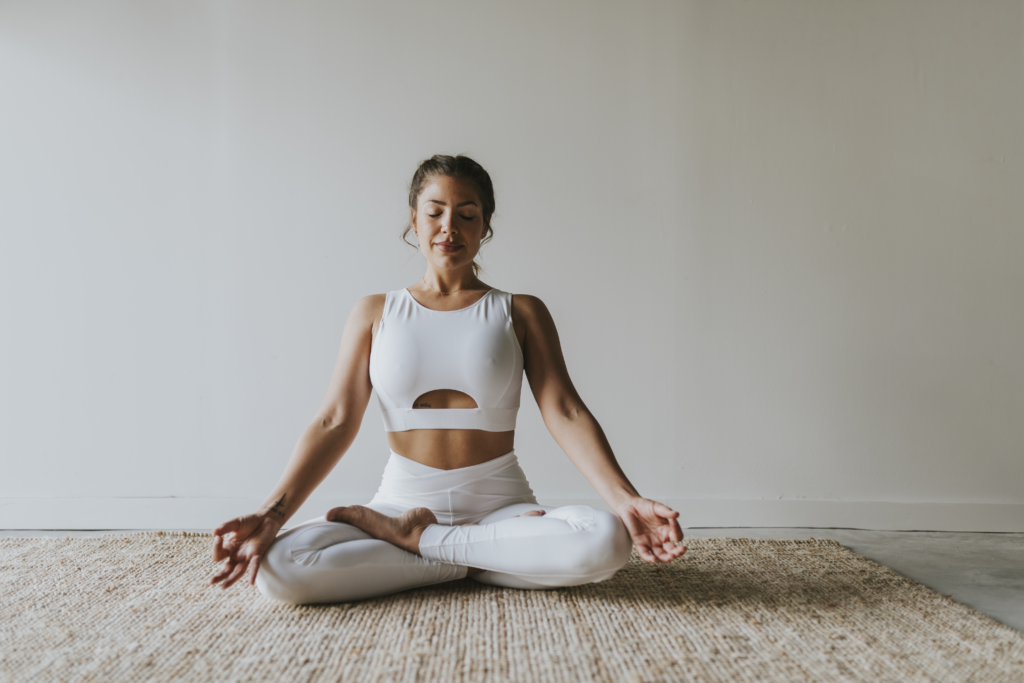
That possibility is rarely as appealing as the promise that consistent effort will eventually unlock every advanced posture. It also challenges the way yoga is sometimes marketed, particularly when flexibility and physical accomplishment are used as evidence of personal transformation.
I think we need to become more comfortable acknowledging that some poses may simply not be appropriate for certain bodies, and that this does not diminish the value of the practice.
Accepting a Limitation Is Not the Same as Giving Up
There is an important distinction between accepting a physical limitation and assuming that nothing can change.
Someone who currently struggles with balance may improve through regular practice. A practitioner recovering from a period of inactivity may gradually rebuild strength and mobility. Even longstanding movement restrictions can sometimes respond to appropriate training, although the degree of improvement varies.
Acceptance does not require abandoning these possibilities.
What it does require is recognising the difference between working towards a reasonable goal and becoming attached to an outcome that may not be suitable or achievable.
Consider a practitioner who has been working towards a full split for several years. They may enjoy the process of improving their flexibility and feel satisfied with the progress they have made. There is nothing inherently wrong with continuing to work on that goal, provided the training is appropriate and does not cause harm.
But suppose the same practitioner begins measuring the worth of every yoga session by how much closer they have come to touching the floor. A practice that once brought enjoyment may gradually become frustrating, particularly when progress becomes slower or less predictable.
At that point, the issue is no longer simply physical flexibility. It is the expectation that improvement must continue indefinitely for the practice to feel meaningful.
Yoga offers an opportunity to question that expectation.
You can continue developing your abilities while recognising that improvement is not always linear. You can work towards a difficult posture without treating its eventual achievement as proof of your commitment. And you can decide that a particular movement is no longer worth pursuing without regarding that decision as a personal failure.
These are not necessarily easy distinctions to make, particularly for people who are accustomed to measuring progress through visible results.
Why Comparing Yourself With Other Yogis Is Particularly Unhelpful
Comparison is difficult to avoid in a group yoga class.
When you are practising alongside other people, you naturally notice differences. Someone appears comfortable holding a balance that you find challenging. Another practitioner moves into a deep forward fold with apparent ease, while you are still working out how to position your knees.
Instructors may remind students not to compare themselves with others, but the physical nature of yoga makes comparison almost inevitable.
What we often overlook is how little information we actually have about another person’s body or experience. A practitioner who moves easily into a deep backbend may have an extensive background in gymnastics or dance. Someone who appears unusually flexible may have naturally greater joint mobility, which does not necessarily mean they possess better strength or control. Another student may be recovering from an injury that is completely invisible to everyone else in the room.
We also tend to compare our own internal experience with someone else’s external appearance. You know exactly how much effort a posture requires from you, but you cannot necessarily tell how comfortable or challenging it feels for the person practising beside you.
This becomes especially relevant when we mistake visual complexity for proficiency.
A relatively simple standing posture performed with awareness, control and comfortable breathing may be more appropriate for one practitioner than an advanced variation performed with considerable strain.
The difficulty is that the more impressive version is usually the one that attracts attention.
In a culture where yoga is frequently documented through photographs and videos, it is worth remembering that the visual appearance of a posture tells us relatively little about the quality of the experience.
The Value of Learning to Use Props Without Feeling Inadequate
Yoga props are one of the clearest examples of how our attitudes towards physical limitations can influence the way we practise.
Blocks, straps, bolsters, blankets and chairs can make postures more accessible by changing the amount of support required or the range of movement involved. They can also be used to develop strength, explore alignment or make a familiar posture more demanding.
Yet there is still a tendency among some practitioners to view props primarily as something beginners need.
A block beneath the hand in Triangle Pose may be treated as an intermediate step towards eventually reaching the floor. A strap used during a seated forward fold may be considered temporary assistance until the practitioner develops sufficient flexibility.
Sometimes that progression is appropriate. But there is no reason why a prop must always be something we are trying to outgrow.
If using a block allows someone to practise Triangle Pose with greater stability and less strain, why should reaching the floor necessarily be considered the better outcome?
The same applies to supported variations of Child’s Pose, seated postures or restorative movements. A practitioner who uses a bolster to support the torso is not necessarily performing a lesser version of the posture.
One of the things I appreciate about experienced yoga teachers is their ability to present props as ordinary parts of practice rather than as compromises. When an instructor uses a block themselves, or explains how a supported variation changes the experience of a posture, it helps challenge the assumption that physical independence is always the ultimate goal.
This is especially important for students who feel self-conscious about being less flexible or physically capable than others.
Props should expand the possibilities available to practitioners, not reinforce a hierarchy in which unsupported postures are automatically regarded as superior.
What Yoga Philosophy Actually Says About Physical Achievement
Modern postural yoga is frequently discussed through the language of physical goals, but traditional yoga philosophy offers a more complicated relationship with achievement.
In Patanjali’s Yoga Sutras, the concept of sthira sukham asanam is commonly understood as describing posture in terms of steadiness and ease.
It is worth noting that this classical teaching did not originally refer to the extensive repertoire of standing balances, inversions and backbends associated with contemporary studio yoga. The context of asana in the Yoga Sutras is closely connected to establishing a stable position for deeper contemplative practices.
Nevertheless, the relationship between steadiness and ease remains an interesting principle through which to examine modern physical practice.
A posture may be technically achievable but require so much strain that the practitioner cannot maintain comfortable breathing or sustained attention. Another variation may look less impressive while allowing greater stability and awareness.
If our understanding of yoga is limited to how deeply we can enter a posture, we risk overlooking these other qualities.
The Yoga Sutras also discuss santosha, commonly translated as contentment, as one of the niyamas or personal observances.
I would be careful not to reduce santosha to the simplistic instruction to be happy with whatever you have. Contentment does not mean ignoring discomfort, abandoning legitimate ambitions or accepting circumstances that could reasonably be improved.
But it offers a useful counterpoint to the assumption that satisfaction must always depend on obtaining something more.
Applied thoughtfully to physical practice, this might mean recognising that a posture can be worthwhile even when it does not resemble the most advanced version. It might also mean allowing yourself to appreciate the abilities you currently have without constantly comparing them with those you hope to develop.
These philosophical ideas deserve more consideration than they often receive in classes primarily organised around physical performance.
Your Body Changes, Even When Your Commitment to Yoga Does Not
One of the less discussed aspects of maintaining a long-term yoga practice is that the body you bring to the mat is not always the same.
Your physical capabilities can change because of age, illness, injury, pregnancy, recovery, stress, changes in activity levels or simply the demands of everyday life. Even from one session to the next, a movement that usually feels comfortable may require more effort than expected.
This is particularly relevant when yoga becomes part of your routine over many years.
It can be tempting to judge your current practice against what you were able to do previously. Perhaps you used to attend demanding Vinyasa classes several times a week, but now find that slower sessions suit your circumstances better. You may once have been comfortable with certain backbends or balances that no longer feel appropriate.
There can be a sense of loss when physical abilities change, especially when they were closely associated with your identity as an experienced practitioner.
I do not think we need to pretend that these changes are always easy to accept.
Someone who has worked hard to develop a particular skill may understandably feel disappointed when it becomes more difficult or inaccessible. A practitioner recovering from an injury may miss the movements they previously enjoyed. People living with chronic conditions may have to make adjustments they did not choose.
It would be dismissive to suggest that yoga can simply teach people to be grateful for these circumstances.
What the practice may offer, however, is a way to remain engaged with movement without requiring the body to return to an earlier version of itself.
Sometimes that means adjusting the intensity of a class. Sometimes it means using more support, spending additional time resting or exploring a different style altogether.
And sometimes it means recognising that rest or rehabilitation takes priority over yoga.
Learning to Distinguish Discomfort From Pain
Discussions about accepting physical limitations can become unhelpful when they fail to distinguish between the ordinary effort of physical practice and sensations that may indicate a problem.
Yoga can involve muscular effort, stretching sensations and positions that feel unfamiliar. These experiences are not automatically harmful, and developing strength or mobility may require working outside one’s usual movement patterns.
However, sharp pain, persistent joint discomfort, numbness, tingling or symptoms that worsen during a posture should not be treated as obstacles to overcome through determination.
The idea that a practitioner simply needs to breathe through every uncomfortable sensation can be particularly problematic.
Breathing and attention may help someone remain calm during manageable physical effort, but they do not make an unsuitable movement safe. Nor should meditation or mindfulness be used to dismiss symptoms that warrant medical assessment.
According to the US National Center for Complementary and Integrative Health, yoga is generally considered safe for healthy people when practised appropriately, although injuries can occur. People with particular health conditions or existing injuries may need to avoid or modify certain postures.
This is one area where accepting physical limitations has a very practical meaning.
Rather than viewing pain as evidence that a posture needs to be pushed further, it may be a reason to change the movement, seek qualified guidance or stop practising that particular pose.
There is also an important difference between a limitation that can be explored through appropriate exercise and one that requires professional medical evaluation.
Yoga teachers can offer modifications within their training and competence, but they should not diagnose injuries or promise that regular practice will resolve medical conditions.
Why Yoga Teachers Have a Responsibility to Normalise Limitations
When reviewing yoga teacher training programmes, I pay particular attention to how schools approach anatomy, modifications, teaching methodology and individual differences.
A comprehensive curriculum should do more than teach trainees how to demonstrate idealised versions of familiar postures. It should help them understand why students may experience those postures differently and how to respond appropriately.
This includes recognising that two people can perform the same movement with different ranges of motion, and that neither necessarily needs to be corrected to resemble the other.
It also involves examining the language instructors use.
There is a considerable difference between telling students to take an easier version if they cannot perform the full posture and presenting several variations as equally legitimate options with different purposes.
The first approach may unintentionally suggest that some students are falling short of an expected standard. The second gives practitioners more freedom to select the version that is appropriate for them.
I would also like to see more emphasis on helping trainee teachers understand the limitations of their own expertise.
Completing a 200-hour YTT does not make someone a physiotherapist, medical professional or specialist in every physical condition. Good teaching includes knowing when a student needs more individual attention than a general group class can provide, and when the appropriate advice is to consult a qualified healthcare professional.
Teachers who are comfortable acknowledging these boundaries may provide a safer and more welcoming environment than those who feel obliged to have an answer for every physical difficulty.
Ultimately, the way instructors discuss modifications and limitations can influence whether students feel comfortable listening to their bodies or pressured to keep up with everyone else.
There Is More to Yoga Than the Postures We Can Perform
When people encounter a physical limitation, the instinct is often to search for another way to achieve the same posture.
That can be worthwhile, particularly when a thoughtful modification makes the movement more accessible. But there is also value in considering whether the posture itself needs to remain the focus.
Yoga encompasses practices involving breathing, attention, meditation, philosophical inquiry and ethical reflection. These dimensions are not dependent on the ability to perform advanced physical movements.
Someone who cannot comfortably kneel may still benefit from seated breathing practices. A practitioner who finds standing balances difficult may explore supported movement, meditation or other aspects of yoga that do not require the same physical demands.
For people living with significant physical limitations, adaptive approaches may provide opportunities to participate without being expected to replicate conventional studio sequences.
This is not to suggest that breathing or meditation can replace every benefit of physical exercise, or that these practices will necessarily be appropriate for every individual. Their value should be considered on their own terms.
What matters is recognising that yoga is broader than the visible performance of asana.
A person does not become less deserving of the identity of a yoga practitioner simply because their physical practice looks different from what is commonly represented in studios or on social media.
Accepting Limitations Also Means Allowing Yourself to Feel Frustrated
One aspect of yoga-related discussions about acceptance that I find particularly unconvincing is the expectation that practitioners should respond to every setback with serenity.
There is a familiar narrative in which someone encounters a physical limitation, learns to release their attachment to a particular outcome and emerges with a deeper appreciation of the practice.
Sometimes people genuinely experience that change in perspective. Other times, they remain frustrated.
A person who can no longer practise in the way they once enjoyed may need time to adjust. Someone who has been working towards a posture for several years may be disappointed to discover that it is not appropriate for their body. A practitioner managing chronic pain may have days when no available modification feels especially satisfying.
I do not think acceptance requires pretending that these feelings do not exist.
In fact, one of the more useful lessons yoga can offer is the opportunity to observe frustration without immediately needing to resolve it.
You can acknowledge that a physical limitation is disappointing while still respecting it. You can wish that your body were capable of something different without forcing it beyond a safe range of movement.
You can also decide to work towards improvement without making your present abilities a source of shame.
This is a considerably more realistic understanding of acceptance than the idea that experienced yoga practitioners should eventually become immune to frustration.
The Freedom of No Longer Having to Prove Anything on the Mat
There is something appealing about reaching a point in your practice where you no longer feel obliged to attempt the most advanced variation available.
This does not necessarily happen because your physical capabilities have declined. It may simply reflect a change in what you value.
Perhaps you enjoy a familiar sequence because it helps you feel more aware of your body, rather than because you expect to improve your flexibility. You may discover that supported postures are more satisfying than challenging balances, or that your favourite part of class is the period of quiet at the end.
With enough exposure to different yoga styles and instructors, it becomes increasingly apparent that there is no single correct way to structure a meaningful practice.
Some people enjoy physically demanding Ashtanga sequences, while others prefer gentle Hatha classes, Yin Yoga or individualised approaches such as Viniyoga. These practices involve different intentions and methods, and none needs to be treated as inherently superior.
The same principle applies within a single class.
You might choose to attempt a difficult balance one day and remain in a supported variation the next. Both decisions can be appropriate, depending on your circumstances.
What changes is the need to interpret every choice as a reflection of how advanced or committed you are.
For me, this is one of the more interesting possibilities that yoga offers: the idea that a long-term practice can become more personally meaningful even when it becomes less physically ambitious.
Our Editorial Verdict: Yoga Is Not About Overcoming Every Limitation
After years of practising yoga and spending time examining how different schools train prospective teachers, I have become increasingly sceptical of the idea that physical progress should be the primary measure of a successful practice.
There is nothing wrong with enjoying difficult postures or working towards greater strength and flexibility. Physical achievement can be satisfying, and many people are drawn to yoga precisely because they enjoy the challenge of learning something new.
But the assumption that every limitation must eventually be overcome creates an unnecessarily narrow understanding of what yoga can offer.
Some limitations are temporary. Others may change gradually with appropriate practice. Some are enduring, and others emerge as our bodies and circumstances change over time.
Recognising these differences does not make a practitioner less ambitious or less dedicated.
If anything, it requires a degree of judgement that can be more difficult to develop than the physical ability to perform a challenging posture.
Our take: One of the most valuable lessons yoga can teach us is that accepting a physical limitation does not mean resigning ourselves to it, nor does it require us to feel grateful for every restriction we encounter. It means learning to make informed choices about how we move, what we pursue and when a particular goal is no longer worth the cost.
A yoga practice does not have to become more physically impressive every year to remain worthwhile. Sometimes, becoming more familiar with your limitations, and less inclined to treat them as failures, is a form of progress in itself.
Frequently Asked Questions
Does yoga teach acceptance of physical limitations?
Yoga can encourage greater awareness of physical capabilities and limitations through mindful movement, breathing and philosophical reflection. However, acceptance is not an automatic outcome of practising yoga, and the experience varies between individuals.
Is it normal to be unable to perform certain yoga poses?
Yes. Differences in anatomy, joint mobility, strength, injury history and other factors mean that not every posture is suitable or achievable for every practitioner. This does not necessarily indicate poor technique or insufficient commitment.
Can you still practise yoga if you have limited flexibility?
Yes. Many yoga postures can be modified using props, different positions or smaller ranges of movement. Flexibility is only one aspect of physical practice, and yoga also includes breathing, meditation and philosophical study.
Should you push through discomfort during yoga?
Not all discomfort means that a movement is harmful, but pain should not be ignored. Sharp or worsening pain, numbness and tingling are reasons to stop or modify the movement. Persistent symptoms should be assessed by an appropriate healthcare professional.
Does using yoga props mean you are less advanced?
No. Props can provide support, improve comfort, change the demands of a movement or help practitioners explore a posture differently. Experienced yoga practitioners and teachers also use props as part of their regular practice.
What is the difference between accepting a limitation and giving up?
Accepting a limitation means recognising your current capabilities and making decisions based on them. It does not prevent you from working towards improvement. Giving up implies abandoning a goal, whereas acceptance may involve changing the goal, adapting the approach or deciding that a particular outcome is no longer appropriate.
Can yoga still be beneficial as you get older?
Yoga may support aspects of physical function and wellbeing, although benefits vary and not every practice is appropriate for every person. Older adults may need modifications depending on their health, mobility and experience.
SEO Details
SEO title: What Yoga Teaches Us About Accepting Physical Limitations
Meta description: After nearly a decade of yoga practice, our editor reflects on flexibility, physical limitations, comparison and learning when to stop pushing.
Suggested slug: yoga-accepting-physical-limitations
Focus keyphrase: Yoga and physical limitations
Secondary keyphrases: accepting limitations in yoga, yoga and body acceptance, yoga flexibility limitations, yoga modifications, mindful yoga practice, yoga philosophy and acceptance
Suggested category: Yoga Philosophy & Reflections
Article type: Personal editorial / Yoga philosophy
Key Takeaways
- Not every yoga posture is appropriate or achievable for every body, regardless of experience.
- Accepting physical limitations does not mean abandoning realistic goals or physical progress.
- Comparing your practice with others is unreliable because anatomy, experience and physical circumstances differ.
- Yoga props and modifications are legitimate parts of practice, not signs of inadequacy.
- Traditional yoga philosophy offers a broader perspective on practice than physical achievement alone.
- Our capabilities can change over time, and adapting a yoga practice is often necessary.
- Pain should not be treated as an obstacle that can always be overcome through determination.
- Good yoga teaching recognises individual differences and the limits of an instructor’s expertise.
- A meaningful yoga practice does not need to become more physically demanding or impressive over time.
Editorial Research and Sources
Editorial perspective: This article draws on the editor’s close to a decade of yoga practice at home, through online instruction and in various studios, alongside editorial research into yoga teacher training programmes and teaching methodologies. The reflections are informed by this experience without presenting individual observations as clinical evidence.
Research and methodology: The article considers physical limitations through the lens of yoga philosophy, contemporary teaching approaches, anatomy-related variation and established yoga safety guidance. Medical claims have been kept distinct from personal opinion.
Primary and authoritative sources:
https://www.nccih.nih.gov/health/yoga-effectiveness-and-safety
https://www.nccih.nih.gov/health/providers/digest/yoga-for-pain-science
https://yogastudies.org/sutra/yoga-sutra-chapter-2-verse-46/
https://learn.yoga.org/faq/how-do-i-modify-poses-for-my-body
Last reviewed: 3 November 2026
Commercial disclosure: No commercial relationship is asserted or implied in this article. Any future affiliate links or sponsored relationships should be disclosed separately.