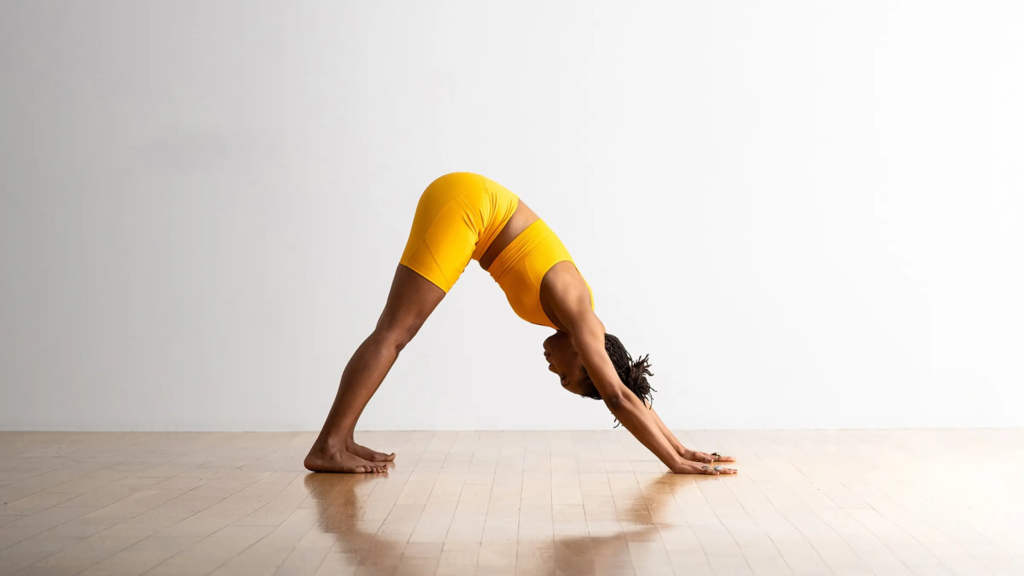
Downward Dog is one of those yoga poses people think they already understand. Even people who have never stepped into a studio can usually picture it: hands on the floor, hips lifted, heels reaching down, body making an inverted V. It looks simple, familiar, almost basic. In many classes, it appears so often that it starts to feel like a resting pose, a transition, a place to reset before the next sequence begins.
But that reputation can be misleading.
The truth is that Downward Dog, or Adho Mukha Svanasana, is much more complex than it looks. It asks for shoulder stability, spinal length, core support, hip flexion, hamstring length, calf mobility, wrist tolerance, and a decent amount of body awareness, all at the same time. It is not just about pushing the heels to the floor or straightening the legs. It is a full-body position that reveals a lot about how a person moves, where they are tight, where they collapse, and where they may be overworking.
That is exactly why Downward Dog matters so much in yoga practice. It is not only a common pose. It is also a pose that can teach alignment, breath, balance between strength and flexibility, and the subtle difference between “doing a shape” and truly supporting the body within it.
What is Downward Dog, really?
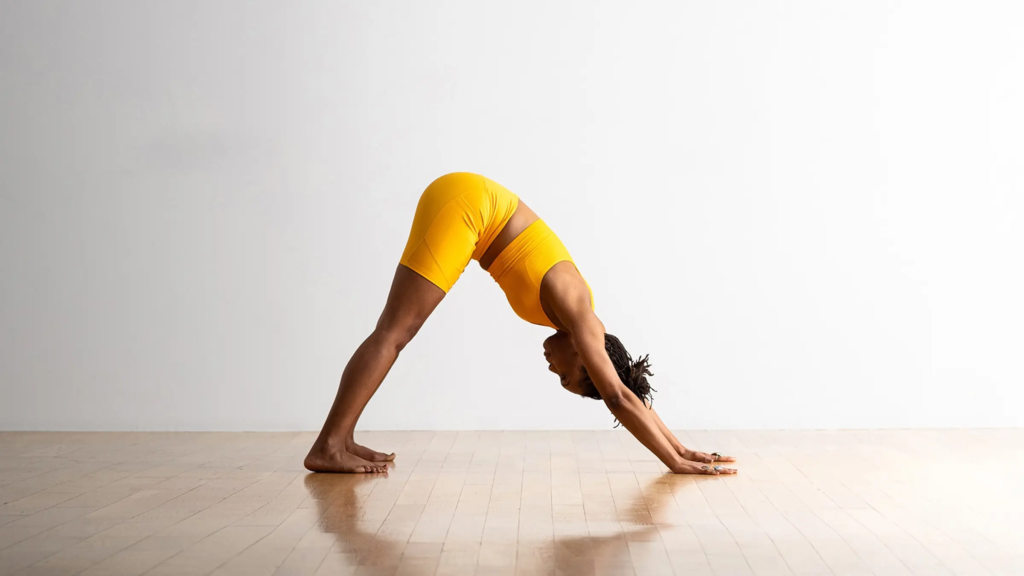
At first glance, Downward Dog seems straightforward. Your palms press into the mat, your feet root down, your hips lift up and back, and your spine lengthens. In practice, though, those instructions leave out a lot.
This pose is not just an upside-down stretch. It is a weight-bearing posture for both the upper and lower body. Your shoulders are working. Your arms are active. Your hands are doing more than people realize. Your ribcage has to stay controlled. Your pelvis needs to tilt in a way that allows the spine to lengthen without forcing the lower back. Meanwhile, the backs of the legs are lengthening, but not in isolation. Everything is connected.
That is part of what makes Downward Dog so important. It sits somewhere between a strengthening pose, a mobility pose, and a postural check-in. It can feel energizing, challenging, grounding, or frustrating depending on the day and the body you bring to the mat.
Why Downward Dog feels hard for so many people
A lot of beginners assume they are “bad” at Downward Dog because their heels do not touch the mat or their legs do not straighten. In reality, those things are not the best measure of the pose.
Downward Dog feels difficult because it combines several demands at once.
The wrists may feel pressure because the body is not distributing weight evenly through the hands. The shoulders may feel jammed because the upper back is not helping enough. The hamstrings may pull if the knees are locked too aggressively. The spine may round if the hips cannot tip well enough. The breath may get shallow if the person is bracing instead of supporting.
This is why the pose can feel very different from body to body. Someone with flexible hamstrings but weak shoulders may struggle in one way. Someone with strong upper body control but tight calves and hips may struggle in another. The pose exposes different things in different people.
That does not mean Downward Dog is inaccessible. It means it is a pose that needs to be learned, not just copied.
Downward Dog is not just a stretch
One of the biggest misconceptions about Downward Dog is that it is mainly a hamstring stretch. Yes, the backs of the legs often feel the pose strongly, but that is only one piece of the experience.
A well-supported Downward Dog involves active pushing through the floor, broadening through the shoulders, wrapping the upper arms with control, engaging the front body enough to avoid dumping into the joints, and lifting the hips without simply collapsing the chest downward. There is effort in the arms, the side waist, the core, and the legs.
In other words, this pose asks for integration, not just flexibility.
That is why some people who are naturally flexible still do not feel stable in it. Flexibility alone does not create a strong Downward Dog. The pose also depends on coordination and controlled muscular engagement.
The shoulders do more work than most people realise
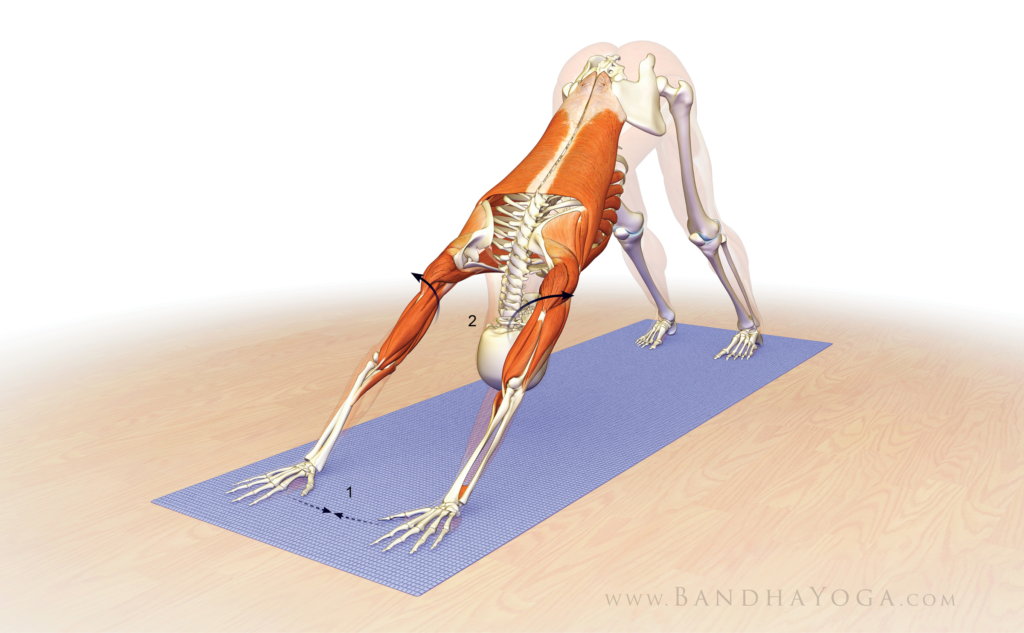
If there is one area that surprises many students, it is the shoulders. Because the pose is often grouped with forward folds or lengthening shapes, people do not always see that it is also a serious upper-body posture.
In Downward Dog, the shoulders are in a flexed position while bearing weight. That means the muscles around the shoulder girdle have to work intelligently to stabilise the arms and keep the neck from tensing. If the shoulders collapse or hike up toward the ears, the pose can feel compressed and tiring very quickly.
This is why teachers often cue students to press the floor away, rotate the upper arms externally, or create space across the upper back. These are not fussy details. They are what help the pose feel spacious instead of jammed.
When Downward Dog is done with better shoulder support, many people notice that their neck relaxes, their arms feel steadier, and the whole pose becomes easier to breathe in.
Your hands matter more than you think
A surprising amount of Downward Dog starts in the hands.
If all the weight drops into the heels of the palms, especially near the wrists, discomfort tends to build fast. But when the fingers spread, the knuckles root, and the whole hand presses more evenly into the mat, the load can be distributed more effectively. That takes some strain off the wrists and creates a more stable foundation through the arms.
The hands are not passive contact points. They are active anchors. They help shape the rest of the pose.
This matters because a weak or collapsed hand position can send problems upward into the wrists, elbows, shoulders, and neck. Sometimes a person thinks they “hate Downward Dog” when really they have just never been taught how much the hands contribute to the pose.
The spine is supposed to lengthen, not just the legs
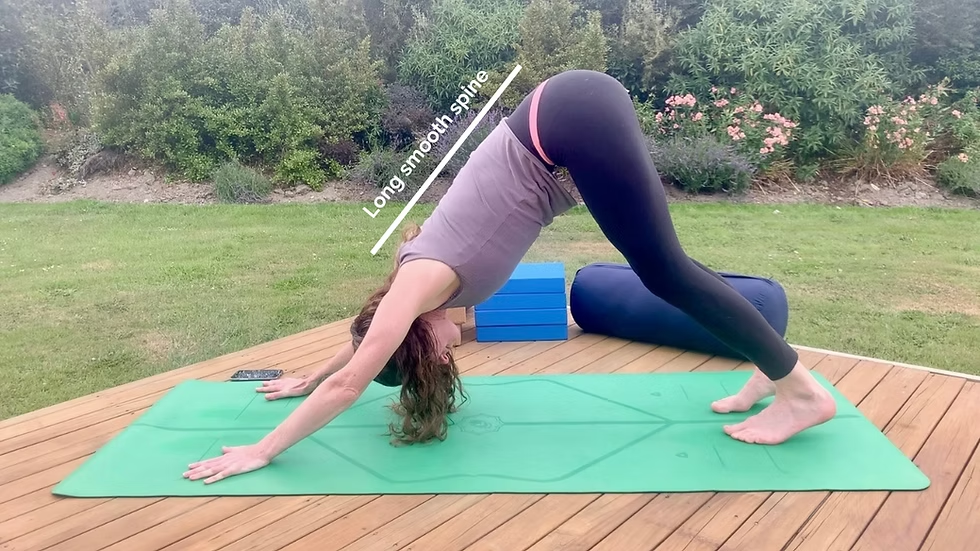
Another common mistake is focusing so much on straight legs that the spine rounds and shortens. That is usually the opposite of what the pose is trying to create.
For many people, bending the knees a little actually improves Downward Dog. It allows the pelvis to tip more freely and helps the spine lengthen with less strain. Once the back feels long and supported, the legs can gradually work toward more extension over time.
This is an important mindset shift. The priority is not usually “heels down at all costs.” The priority is a long spine, supported shoulders, and steady breath. Heels touching the floor might happen eventually, or they might not, depending on anatomy. Either way, that is not the core goal of the posture.
When people stop treating Downward Dog as a performance of flexibility, the pose often starts to feel more useful and more intelligent.
Why anatomy changes the pose
Downward Dog can look slightly different from person to person, and that is not a flaw. Different limb lengths, shoulder structures, hamstring tension, calf mobility, ankle range, and even hand proportions can affect how the posture appears and feels.
Some people naturally have a steeper angle in the pose. Some have a shorter stance. Some need wider hands or feet. Some feel better with heels lifted. Others need a micro-bend in the elbows or knees to avoid locking into their joints.
This is one reason why strict visual ideas of the “perfect” Downward Dog are not always helpful. A pose can look polished in a photo and still feel poorly supported. Another pose may look less dramatic but be far more functional.
Yoga gets more interesting when you stop chasing a standardised shape and start paying attention to what the pose is actually asking of your body.
Why Downward Dog is often called a resting pose
This confuses a lot of people, especially beginners. If Downward Dog feels intense, why do teachers sometimes treat it like a moment of reset? The answer is context.
For an experienced practitioner with enough mobility, strength, and familiarity, Downward Dog can indeed feel steadying. It can become a place to reconnect with the breath, organise the body, and prepare for what comes next. But that usually happens after time and practice. It is rarely restful for everyone, especially not at first.
That is worth saying clearly because many students feel discouraged when a teacher casually says “rest in Downward Dog” and the pose feels anything but restful. There is nothing wrong with you if that happens. It simply means the pose is still asking a lot from your body right now.
In that case, Child’s Pose may be the more genuinely restful option.
The pose teaches more than posture
Part of Downward Dog’s complexity is that it teaches broader yoga skills.
It teaches how to build from the ground up. It teaches how to create effort without unnecessary tension. It teaches how to work with modifications instead of resisting them. It teaches patience, because the pose rarely improves through force. And it teaches discernment, which is often more valuable than flexibility.
A student can learn a lot by noticing what happens in Downward Dog. Do they grip the jaw? Do they lock the knees? Do they rush the breath? Do they dump weight into the wrists? Do they prioritise appearance over function?
These are not just pose-specific questions. They are practice questions. They say something about movement habits, stress patterns, and body awareness more broadly.
Common mistakes in Downward Dog
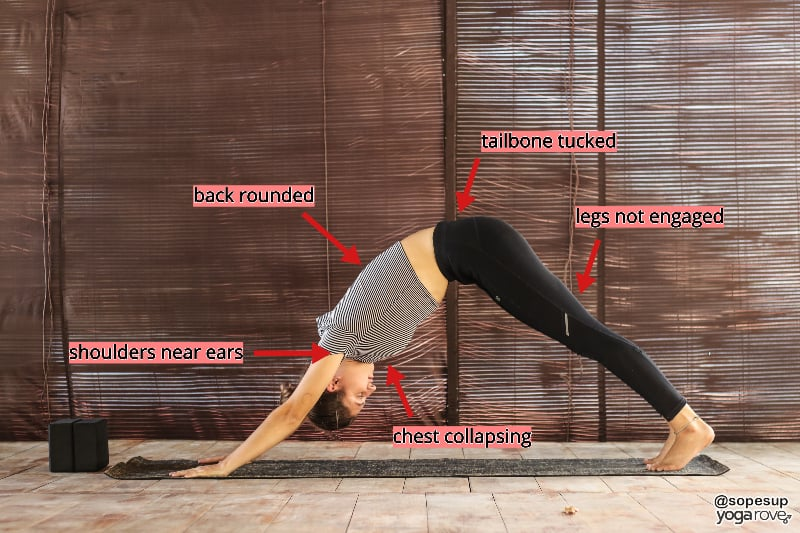
A few patterns show up again and again. One is forcing the heels down and sacrificing the spine. Another is collapsing into the shoulders instead of pushing the floor away. Some people place the hands too close to the feet, which crowds the pose. Others overarch the lower back in search of lift. Quite a few people grip the pose with unnecessary tension in the neck and face.
The good news is that these are workable issues. Small adjustments can make a big difference. Bending the knees, lifting the heels, widening the hands slightly, or shortening the hold can completely change the experience of the pose.
That is why Downward Dog often improves with good cues rather than brute effort.
How to make Downward Dog feel better
The simplest advice is often the most effective: bend your knees a little and focus on lengthening your spine first. From there, press firmly through the hands, especially the fingers and knuckles, lift the hips up and back, and let the heels be less important.
Think of the pose as creating space rather than forcing depth.
You can also practice shorter holds. There is no prize for staying in an uncomfortable Downward Dog for too long. Sometimes five well-supported breaths teach more than a strained one-minute hold.
Props and modifications help too. Placing the hands on blocks or practicing a wall version can reduce pressure and make the alignment clearer. These versions are not lesser. They are often smarter, especially when learning.
Why this pose deserves more respect
Downward Dog is so common that it is easy to underestimate. But that familiarity hides how sophisticated the pose really is. It is not merely a transition or a filler shape between more impressive postures. It is a pose that asks for coordination, control, mobility, and attention.
In many ways, that is what makes it such a valuable yoga posture. It meets people again and again at different stages of practice. Early on, it reveals limitation. Later, it refines awareness. Even after years, it can still teach something.
So yes, Downward Dog is iconic. But it is also layered, technical, and surprisingly honest. The more time you spend with it, the more you realise it is not a simple pose at all. It is one of yoga’s clearest reminders that the shapes people take for granted are often the ones with the most depth.
FAQ: Why is Downward Dog so hard?
Is Downward Dog supposed to be difficult?
Yes, for many people it is. Downward Dog requires shoulder strength, core support, hamstring length, calf mobility, and wrist tolerance. It often looks easier than it feels.
Why can’t I get my heels to the floor in Downward Dog?
Your heels do not need to touch the floor for the pose to be effective. Tight calves, hamstrings, ankle mobility, and individual anatomy can all affect heel position.
Should I bend my knees in Downward Dog?
Yes, especially if bending the knees helps you lengthen the spine and feel less strain in the back or hamstrings. For many practitioners, this is the better version of the pose.
Why do my wrists hurt in Downward Dog?
Wrist discomfort often happens when too much weight dumps into the base of the palms. Pressing through the fingers and knuckles, engaging the arms, and adjusting your overall alignment can help.
Is Downward Dog a resting pose?
It can be for experienced practitioners, but not for everyone. If it feels tiring or stressful, that is normal. Child’s Pose may be a more appropriate rest position.
What muscles does Downward Dog work?
Downward Dog involves the shoulders, arms, upper back, core, hips, hamstrings, calves, and feet. It is both a strengthening and lengthening posture.
SEO title
Why Downward Dog Is More Complex Than You Think
Meta description
Downward Dog may look simple, but it is one of yoga’s most complex poses. Learn why this classic posture requires more strength, mobility, and body awareness than most people realise.